
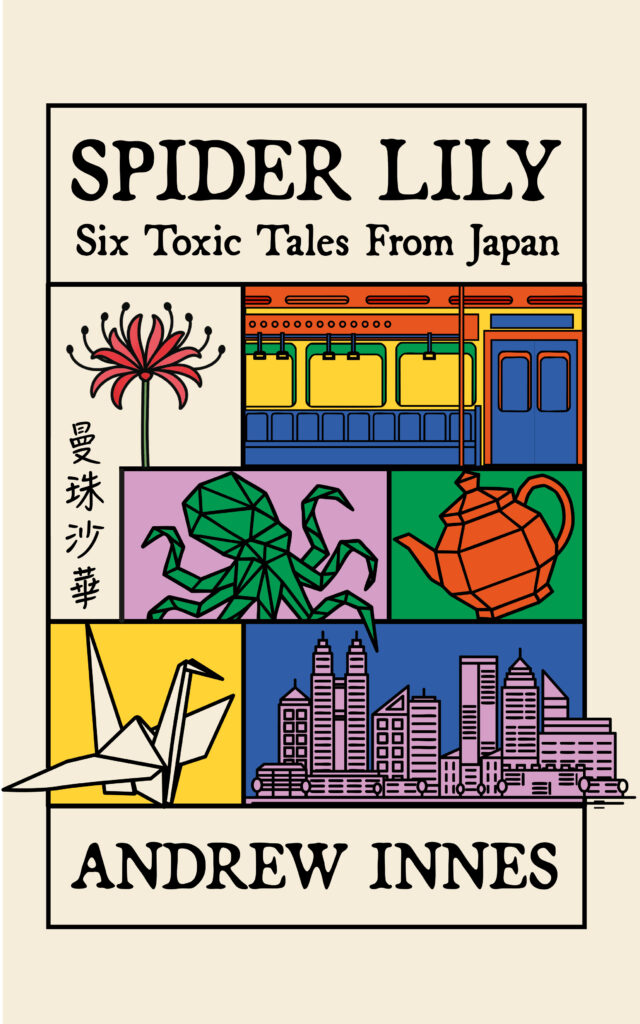
Andrew Innes came to Himeji in 2002 when the cherry blossoms were in full bloom and the Hanami parties were in full swing. He now works at three universities in Hyōgo and edits the online journal, The Font, where extracts from his book can be found. In his free time, he enjoys hiking and traveling.
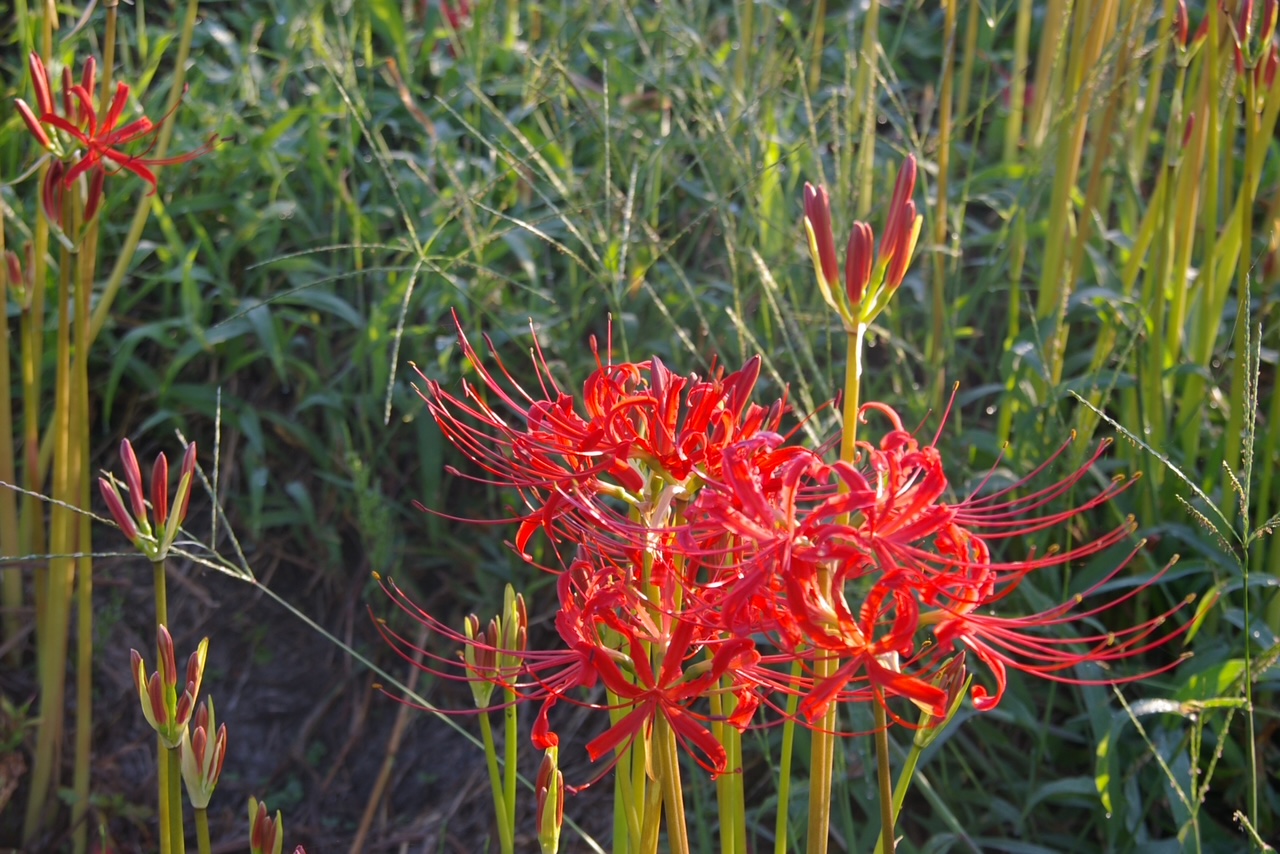
Spider lilies. Everyone who lives in Japan, especially in an area with rice fields, is familiar with the clouds of red (and, occasionally, pink and white) knee-high blooms that suddenly appear, most often on the verges of rice fields, around the Autumnal Equinox – in fact, their name in Japanese, higan-bana, refers to this time of year. Higan refers to “the other shore” and this is a time for reflection upon the relationship between this world and the “other world” of enlightenment. This unusual lily (Lychorus radiata) comes up year after year in the same spot, from underground roots, and is gone within a few weeks.
In English, the name “spider lily” has a distinctly creepy sound. It’s really nothing to do with spiders, unless you count the hairlike projections that ring the central blossoms, which make it look a little tingly, as though it would brush the back of your neck similarly to a spider walking along there. Arachnophobia is a major fear for millions of people, and this feeling of irrational creepiness is inherent in the word.
One thing that is decidedly creepy about these lilies is that they are poisonous, especially the roots, and they can be used in the garden as a deterrent to pests (as long as you don’t make a habit of touching them!) In the first story in this book, “Spider Lilies”, some of the facts and legends surrounding this flower are recounted. Among them is a story that the poisonous quality of the flower is responsible for another name for the flower, () hand rot (probably referring to the idea that you shouldn’t touch the flowers or bring them into the house).
Readers of this website may remember The Short Story Collective; 13 tales from Japan, by the same author, which was reviewed here (2021, by John Dougill). These stories are modern, for the most part, dealing with various facets of life in Japan, from pachinko parlors to the world of J-pop singing groups, and the scenes are modern too, from uninhabited buildings in the city to small night open food stalls. There are, as usual, a number of references to smartphones and other modern technology. But what struck me in these stories was the theme of women’s rights and opportunities vs. the (in many cases) antidiluvian powers-that-be in Japan, both urban and rural, and how this affects both high-class art and ordinary lives. Many of the major characters in the stories are women trying to live their dreams (and often being punished for it).
The men who appear in the stories may be organized crime personalities or affiliated with them; they may be accused of sexist crimes; they may be offhand with women trying to pursue what have traditionally been men-only pastimes; they may be helpful. Some of them come to sticky ends, some are protected by their position. Some are motivated by alcohol, others by their innate place in society, which makes it, in many cases, a no-brainer to discourage women.
The stories are quite involved, and require some concentration to keep characters and plot straight. But all are entertaining, and deal with scenes and happenings that shed light on various aspects of Japanese society in the age we live in. They are creepy too.